The 5 gift rule for Christmas: want, need, wear, read, do

The 5 gift rule gives each child five gifts: something they want, something they need, something to wear, something to read and something to do. The 4 gift rule drops the last slot, and the 3 and 7 gift rules shrink or stretch the list. Pick a rule below, add each child and plan one slot at a time.

Gift rule planner

Pick a rule, then write one gift idea in each slot for each child. Tick the gifts Santa brings and add a budget if you like. Print the plan for the fridge or copy it into a note. Need ideas for a slot? Browse our Christmas gift ideas.

Pick a rule

Plan each child

The plan is saved only in this browser, on this device, and never sent to us. Clearing your browser data erases it, so print a copy once it's done.

What is the 5 gift rule for Christmas?

The 5 gift rule caps each child's Christmas at five gifts, one in each slot: something they want, something they need, something to wear, something to read and something to do. The do gift is an outing or an activity, like a class, a pair of tickets or a day at the trampoline park. Some families swap it for something to share or something special.

Nobody has traced who started it. The rhyme behind it, something you want, something you need, something to wear, something to read, has passed between parenting blogs and Pinterest boards for years, and every family bends it a little.

The appeal is simple: each gift gets chosen on purpose, and the December shopping list stays short. Christmas morning can wrap up before anyone melts down, too. Treat five as a limit, not a target: four great gifts beat five so-so ones, and nobody counts the boxes at noon.

Six wrapped gifts in a row under a Christmas tree by a glowing fireplace: a book tied with a red ribbon, a soft bundle in cream cloth tied with twine, a red box with a gold bow behind the book, a tall red box and a small red box with gold bows, a gold box with a green bow, and a wooden rocking chair nearby
One to read, one to wear, and a few to guess at.

What is the 4 gift rule?

The 4 gift rule is the rhyme on its own: something you want, something you need, something to wear and something to read. It is the version families share most, and it fits on a sticky note.

Each slot has a trick. The want is the wish they keep talking about, so plan it first and spend there. The need should still feel like a present: new cleats or a sturdier backpack, not toothpaste. Wear can be fun, like pajamas for Christmas Eve or a jersey from their team. Read covers comics, cookbooks, a magazine subscription or the next book in a series they love.

The rule works at any age, but the slots change shape as kids grow. A preschooler's need might be snow boots, and a teen's might be a lamp for homework. The table shows one example for each slot at three ages, with links to more ideas for each age below it.

One gift idea per slot at three ages
SlotAges 3 to 5Ages 6 to 9Ages 10 and up
Wanta wooden train seta marble runa skateboard
Needsnow bootsa sturdy lunch boxa desk lamp for homework
Wearpajamas with their favorite animala team jerseya hoodie they picked
Readlift-the-flap booksthe first book of a chapter seriesa graphic novel
Doa morning at the zooa session of swim lessonstwo concert tickets

What is the 3 gift rule?

The 3 gift rule gives each child three gifts. Many families tie it to the Nativity story: in Matthew 2:11, the wise men open their treasures and give the young Jesus gold, frankincense and myrrh. If three gifts were enough for him, the thinking goes, three are plenty for us.

Families who follow the story often match each gift to one of the three. Gold is something precious, the gift the child has been hoping for. Frankincense is something for the spirit or the mind, often a Bible, a devotional or a journal. Myrrh is something for the body, like a warm coat, new shoes or pajamas.

Other families keep the number and drop the symbols, using want, need and read. That is the 3 gift version in the planner above. Either way, three is the point: it's easy to keep even between siblings, and the unwrapping is done before the cinnamon rolls go cold.

Three gifts, after the story

  1. GoldSomething precious they have been hoping for
  2. FrankincenseSomething for the spirit or the mind
  3. MyrrhSomething for the body: a coat, shoes, pajamas

What is the 7 gift rule?

The 7 gift rule keeps the five slots, want, need, wear, read and do, and adds two more. There is no fixed pair. Common picks are something to share, like a board game for the whole house, and something to eat, like a favorite treat. Others add something handmade or one gift for the family.

Seven suits bigger kids with long wish lists, or families with relatives who want to chip in. A grandparent can take the share slot or the do slot, so their gift fits the plan instead of adding to the pile under the tree.

A few families stretch the idea to ten slots, adding things like a gift to give away or something to make. Past seven, though, the rule stops doing its job of keeping Christmas small. If you keep adding slots, go back to five and make each one count. The planner above switches between rules without losing what you typed.

One common seven

  1. Want, need, wear, readThe four from the rhyme
  2. DoAn outing, a class or tickets
  3. ShareA game or a gift for the whole house
  4. EatA treat they love, maybe from a stocking

How many gifts should come from Santa?

There is no standard. In one common plan, Santa brings one gift, often the want, and fills the stocking, while the other gifts come from the family. In another, Santa fills only the stocking. Some families let Santa bring everything under the tree.

Some parents keep Santa's gifts small on purpose. In December 2017, Megan Dunn, a social worker in Kentucky, asked parents on Facebook to take the credit for expensive gifts, so children in families with less money don't wonder why Santa brought them less. Her post went viral, and Good Morning America was still sharing it two Christmases later.

With a gift rule, decide which slot Santa covers, tick it in the planner and give the rest yourself. To learn the wish Santa brings, a child can tell him on a live video call that a grown-up starts. Santa never promises a gift, and the wishes come back to the grown-up with store prices. Read how calling Santa works.

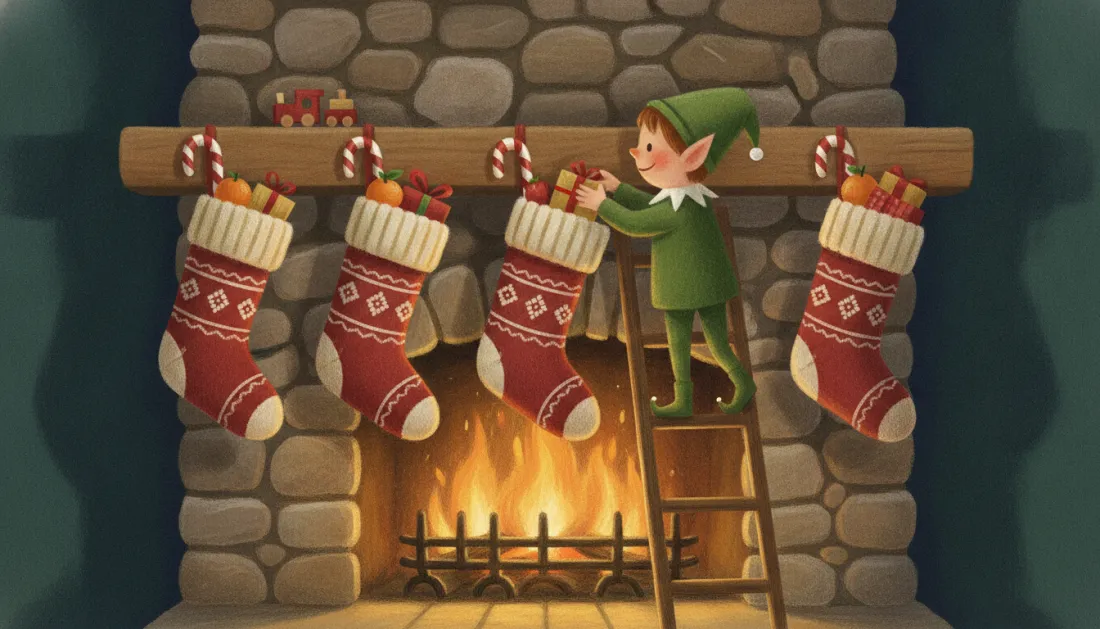
An elf on a wooden ladder tucks a small wrapped gift into one of the red knit stockings hung with candy canes along a stone mantel above a crackling fire
Stockings first. The rest is up to your family.

Are gifts from Santa wrapped or unwrapped?

Both are common. In many homes, Santa's gift waits unwrapped by the tree, so the kids see it the moment they come downstairs. It is often the big one that is hard to wrap anyway, like a bike, a play kitchen or a skateboard.

Other families wrap Santa's gifts too, in paper that never turns up on family presents, so the kids can tell his gifts from yours at a glance. Stocking gifts usually go in loose. Neither way is wrong.

With a gift rule, the choice often settles itself. If Santa brings the want, leave it unwrapped as the first thing they see, and wrap the need, wear and read gifts from the family so there is still something to open. If Santa covers only the stocking, everything under the tree can be wrapped. Whichever you pick, keep it the same each year. For Santa's paper and handwriting, see our printable Santa gift tags, and for neat corners, the guide to wrapping presents.

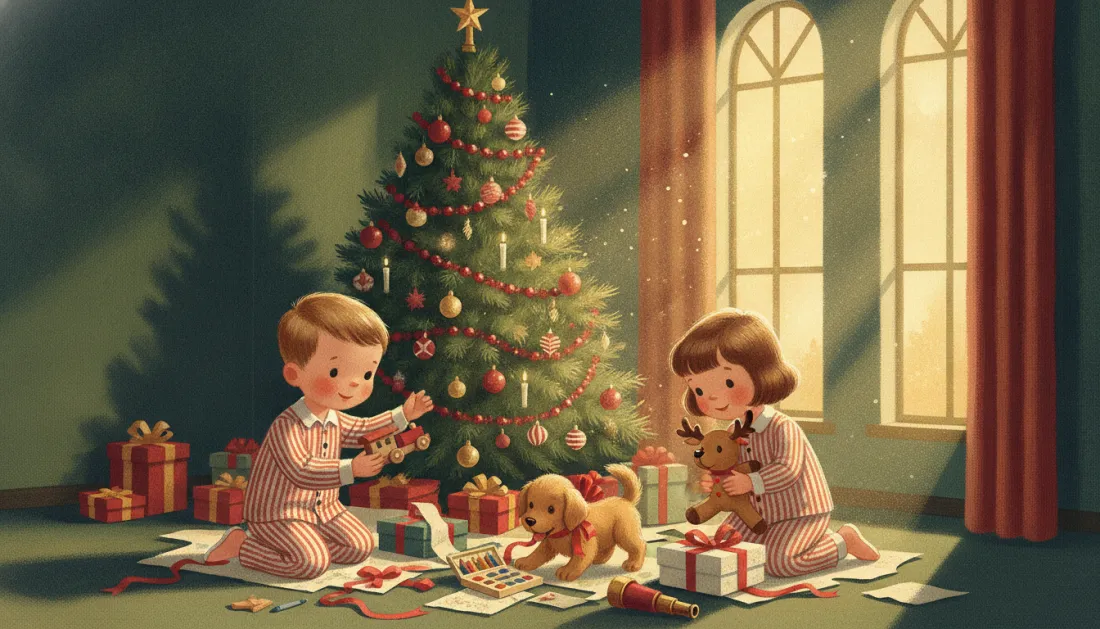
A boy and a girl in striped pajamas kneel on the floor by a candlelit Christmas tree on a sunny Christmas morning, the boy with a small wooden toy and the girl hugging a plush reindeer, while a puppy tugs at a ribbon among wrapped boxes and torn paper
Christmas morning, wrapped or not.

How do you keep a gift rule fair between siblings?

Keep the slots the same, not the prices. A preschooler's want might be a toy dump truck and a teenager's a pair of headphones. Each child gets one want, and each one gets to feel it was the big one.

If spending matters in your house, set one budget per child and let it move between slots. The planner adds up each child's budget, so you can see at a glance when one card runs far ahead of the others.

Count the extras too. Stocking gifts, Santa's gift and presents from relatives can tip the balance more than the rule itself. Some families make sure every child opens the same number of boxes, even if one box holds socks. Older kids can help choose a younger sibling's read or share gift, which makes them part of the plan instead of judges of it.

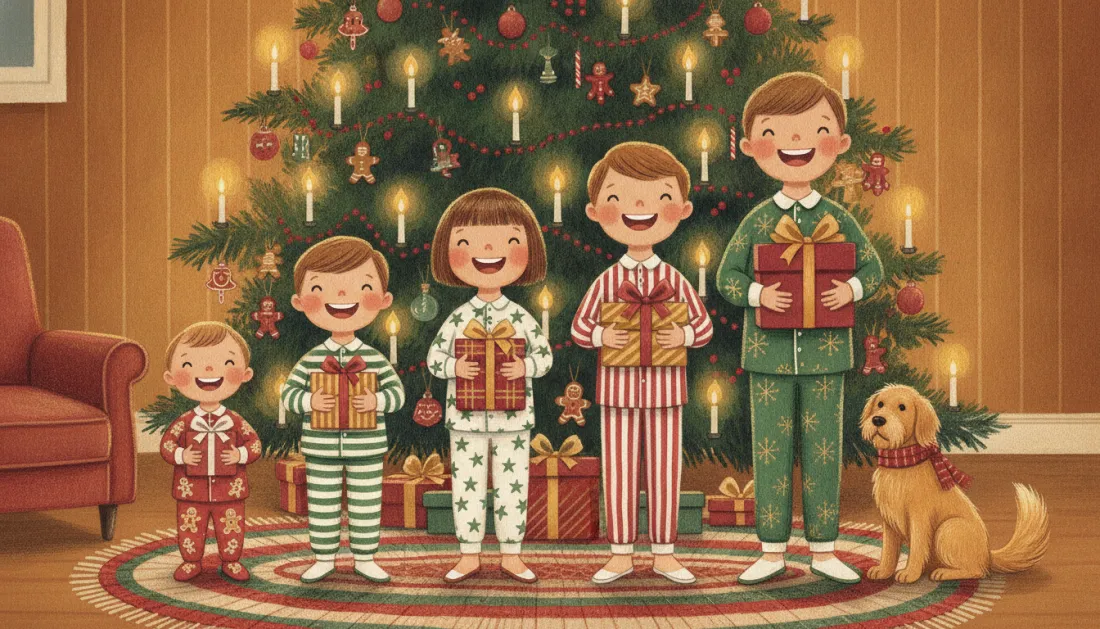
Five children in Christmas pajamas stand in a row from smallest to tallest in front of a candlelit tree, each holding a wrapped gift, with a golden retriever in a plaid scarf beside them
Five sizes, five gifts each.

How do you pay less with a gift rule?

A gift rule already trims spending, because it caps the count. The need and wear slots save more: they cover things you would buy in January anyway, so part of Christmas is money that was already in the budget.

Plan the want slot first and shop for it early. Price it at three stores and add shipping before you pick one. If the want came from a live video call with Santa, that work is done: each wish comes back to the grown-up priced at several stores, lowest price first, with a link to buy. After you buy, save the receipt. If Target lowers its own price on the item within 14 days, its price match lets you ask for the difference. Since July 2025 it no longer matches other stores.

Last, share the plan with grandparents and other relatives before they shop, so nobody buys a second pair of pajamas for the wear slot. Point them to your child's Christmas wish list for everything the rule leaves out.

Before you shop

  1. Pick the ruleAnd decide which gift Santa brings
  2. Plan the want firstIt's the one they will remember
  3. Set a budget per childThe planner adds it up
  4. Share the planSo relatives don't double up

Christmas gift rules: questions

Does the 5 gift rule work for adults?

Yes. Couples and grown-up siblings use want, need, wear, read and do to keep gifts small and thoughtful, and the do slot makes a natural date night. To learn a grown-up's want, send them a link to Santa's interview.

Do stocking stuffers count toward the rule?

Most families leave the stocking outside the rule and keep it small. For ideas, see our stocking stuffers.

What about gifts from grandparents?

Give them a slot, often do or share, or point them to the wish list. Grandparents can find ideas in gifts for grandkids.

What counts as something to read?

Picture books, chapter books, comics, cookbooks, a magazine subscription or an audiobook for car trips all count.

What if my child only wants one big thing?

Make it the want and keep the other slots small. Siblings can share one do gift, like a family outing.

Can a call with Santa be the do gift?

Yes, as long as a grown-up starts the call. Relatives can chip in with gift minutes: they pay the same $1 a minute and get a gift card with a code to hand to the parents. There's nothing to wrap, and the minutes don't expire.

Is my plan saved?

Yes, but only here: this browser, on this device. We never receive it. Clearing your browser data wipes it, so print a copy.

Where can I find ideas for each slot?

Try Christmas gifts for kids, gifts by age and gifts for teens.

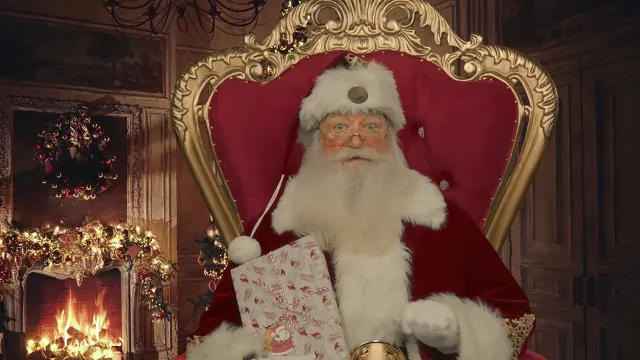
Santa in his red suit on a gold throne, holding a wrapped giftLive video

Not sure what goes in the want slot?

Let them ask Santa. On a live video call that a grown-up starts, kids tell Santa their wishes, and the wishes come back to the grown-up with store prices, lowest first. $1 a minute.

Call Santa